
Lawn Care and Snow Removal
Grading and Seeding in Nelsonville
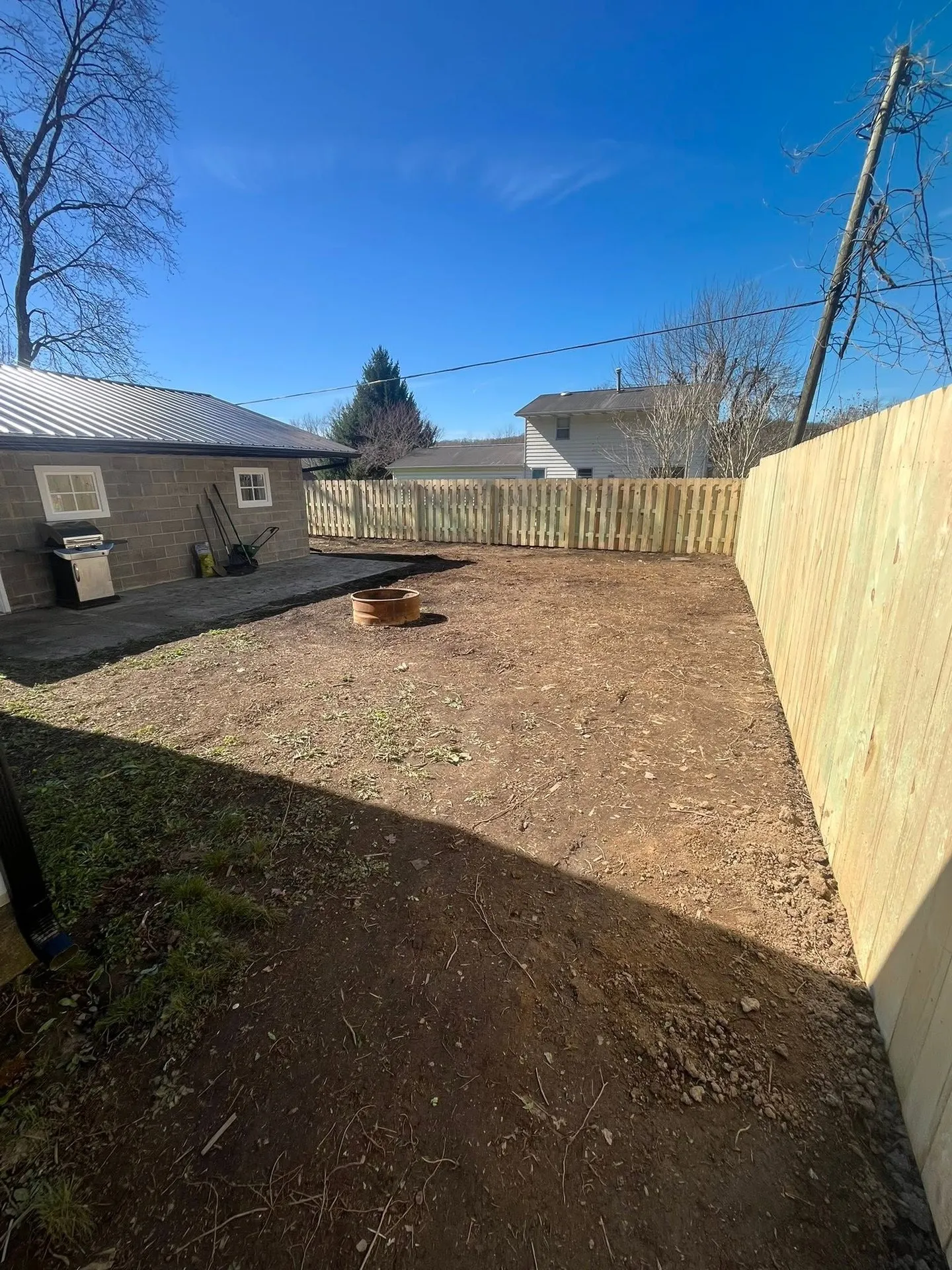
Rough, rutted and bare ground reshaped, seeded and strawed, so a yard can be mowed instead of fought with.
Which One
When Does a Yard Need Grading Instead of Seeding?
Seed fixes a lawn that is thin. Grading fixes a lawn that is the wrong shape. The two get confused and the result is somebody seeding the same low spot every spring and wondering why the grass keeps dying in it.
If the ground is reasonably level and the problem is bare patches, thin turf or an area that got worn out, seeding on its own is the answer. If water stands after a rain, the surface is rutted from equipment or a vehicle, the soil has washed out on a slope, or the ground slopes back toward the house, then no amount of seed holds, because the thing killing the grass is still there. That ground has to be reshaped first. We tell you which one you have when we look at it, including when it is the cheaper of the two.
Grading
What Does Grading a Yard Involve?
Moving soil until the surface drains the way it should and sits level enough to mow. In practice that means cutting down the high ground, filling the low spots, breaking up compacted areas so roots and water can get in, and setting the final slope so runoff moves away from buildings rather than toward them.
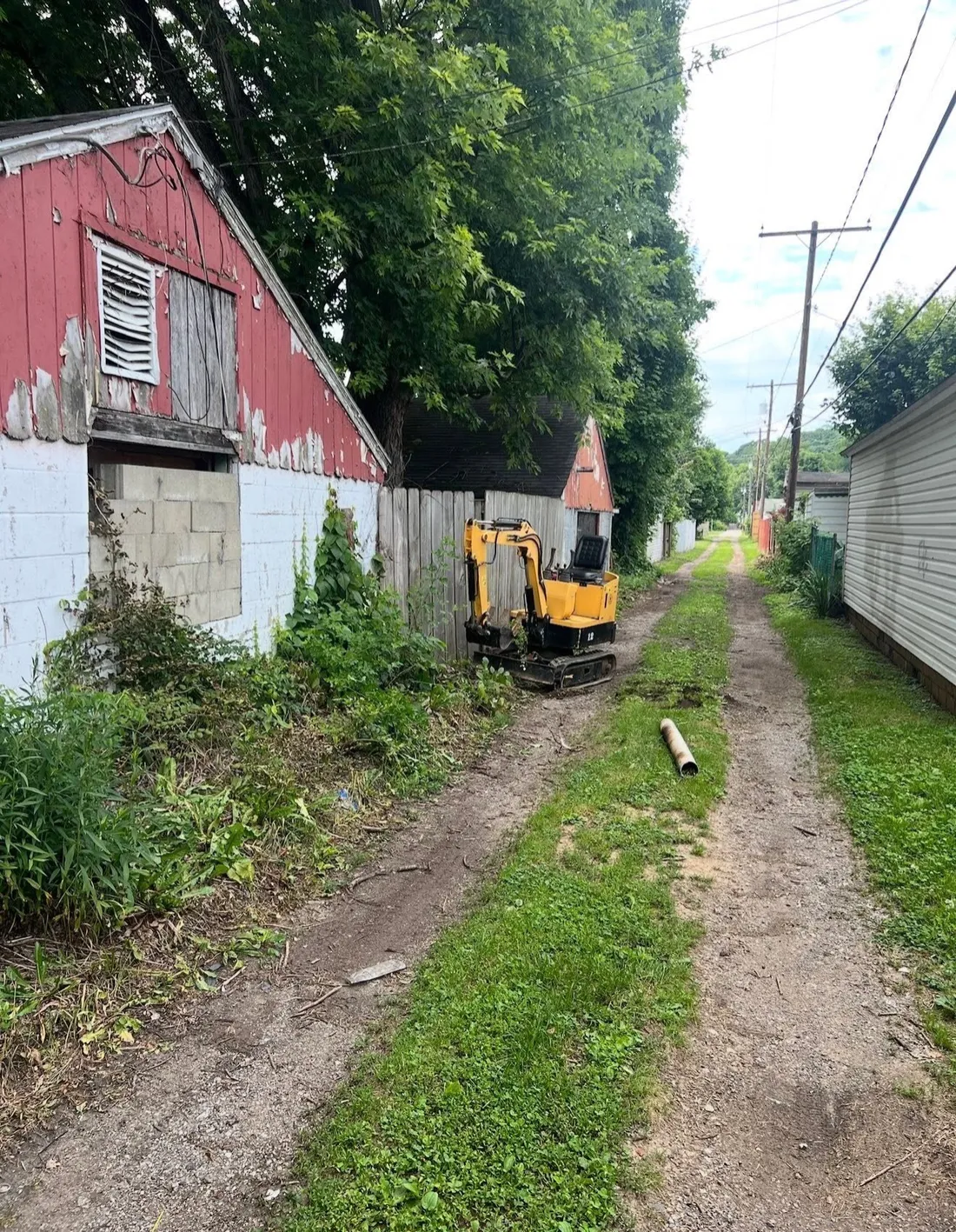
New construction lots are a common one, where the yard was left rough when the house was finished and nobody ever came back to it. Drives and parking areas that rutted are another, and so is ground that washed after a wet year. The work needs machines and it needs somebody paying attention to where the water is going to go afterward, which is the part that gets skipped.
Seeding
How Is a New Lawn Seeded?
Seed thrown on hard ground mostly feeds birds. Getting a stand of grass to actually establish is a sequence, and skipping steps in it is why so many seeding jobs fail.
- The surface loosened so seed has soil to sit in rather than a crust
- Seed chosen for the conditions, since sun, shade and traffic are not the same mix
- Seed spread at the right rate, because too heavy competes with itself and too thin lets weeds in
- Good contact between seed and soil, which is what actually drives germination
- Straw spread over the top to hold moisture and keep the seed in place
- A watering plan handed to you, because the first three weeks decide the outcome
Straw
Why Is Straw Spread Over New Seed?
Three reasons, and all of them matter more on a slope. Straw holds moisture at the soil surface so the seed does not dry out between waterings, which is usually what kills a new seeding. It shades the ground enough to keep the top layer from baking. And it physically keeps the seed where you put it, so the first hard rain does not wash a season's worth of work down to the bottom of the yard.
A light, even layer is what you want, enough that you can still see soil through it. Piled on thick it smothers the seedlings it was supposed to protect. It breaks down on its own, so nothing has to be raked off afterward.
Timing
When Should You Seed a Lawn in Ohio?
Late summer into early fall is the best window in this climate, and it is not close. The soil is still warm enough for fast germination, the nights have cooled off, rain is more reliable, and the weeds that would compete with new grass are winding down for the year. Grass seeded then has the whole fall and the following spring to root before it faces its first real summer.
Spring is the second choice and it works, but a spring seeding spends its first summer with a shallow root system right as the heat arrives, and it is competing with every weed seed in the soil. Midsummer is the one we will try to talk you out of unless you are prepared to water it daily.
Afterward
How Long Before You Can Mow New Grass?
Until it is tall enough to take a cut without being pulled out by the roots, which usually means letting it reach three or four inches and then taking only the top off. For a fall seeding that is commonly four to six weeks, but it depends far more on water and temperature than on the calendar.
The first few cuts should be with a sharp blade on dry ground, because a dull blade tears young grass rather than cutting it and wet ground lets the wheels pull the seedlings out. Light foot traffic is fine sooner than people think. Heavy use should wait for the second season. Once it is established we can put it on a regular Lawn Mowing schedule.
Common Questions
Grading and Seeding FAQ
How soon will I see grass come up?
Germination typically starts within a week to two weeks in good conditions, though the lawn will look patchy for a while after that because not every seed comes up at once. Judge it at about six weeks, not at two.
How much do I need to water new seed?
Light and frequent at first, so the top layer of soil stays damp rather than soaked, then less often and deeper once it is up. The first three weeks are the ones that decide whether the seeding takes, and we will walk you through it before we leave.
Can you fix just the bare patches instead of the whole lawn?
Yes. Spot repair and overseeding are a much smaller job than a full seeding, and for a lawn that is mostly healthy it is usually the right call. If the same patch keeps dying, that is a sign the problem is the ground rather than the seed.
Can you fix water standing in my yard?
Often, if the cause is the shape of the surface, which it usually is. Regrading to move water away rather than letting it pool is a normal part of this work. If the cause is below ground, we will tell you that rather than regrading the same spot twice.
More Services
Other Work We Handle
Reviews
What Our Customers Say
Our customers leave their own words on our Google profile.
 Find Us on Google
Get In Touch
Contact Us
Tell us about the property and what you need for grading and seeding. We will come look before we quote.
Contact Us
Tell us about the property and we will get back to you.